This summer of 2026, I worked at Remington & Vernick Engineers, an Ardurra Company. This was my third summer internship working for the company, which gave me a lot of experience, insight into the profession, and trust to take on my own projects.
Where did I work
Remington & Vernick Engineers, shortened to RVE, is a 120 year old engineering consulting company. Founded in South Jersey, RVE serves the engineering needs for local townships. When cities, townships, and boroughs have engineering questions, projects, or need an engineer-of-record (a town council position) to sign off on something, they reach out to RVE. The experienced Project Managers act as client representatives to townships, and distribute work to the design engineers on their teams. RVE has been expanding to include more offices in more states for years, acquiring other companies to grow the company’s reach and expertise. Just this year, a rising national firm called Ardurra bought Remington & Vernick Engineers, and the summer was spent transitioning to Ardurra’s Northeast Branch.
I worked in the Municipal Department, doing site-civil engineering work. RVE also had a water-wastewater department, a survey-GIS department, an infrastructure (structural) department, and more. Specifically, I worked at the Cherry Hill HQ, which serves many townships, houses the regional leadership team, and coordinates work across the region from others offices.

What did I do
In the Municipal Department, I performed a lot of tasks that are categorized as site-civil engineering. My Viterbi major is civil engineering with an emphasis in building science, which can be described as architectural engineering. Site-civil work refers to engineering work of the built environment on the ground level, including roadway design, sidewalks, accessible routes, stormwater management, permits, and much more. While these appear unconnected to architectural engineering, I used the inherent design skills of my program to deliver thoughtful designs.
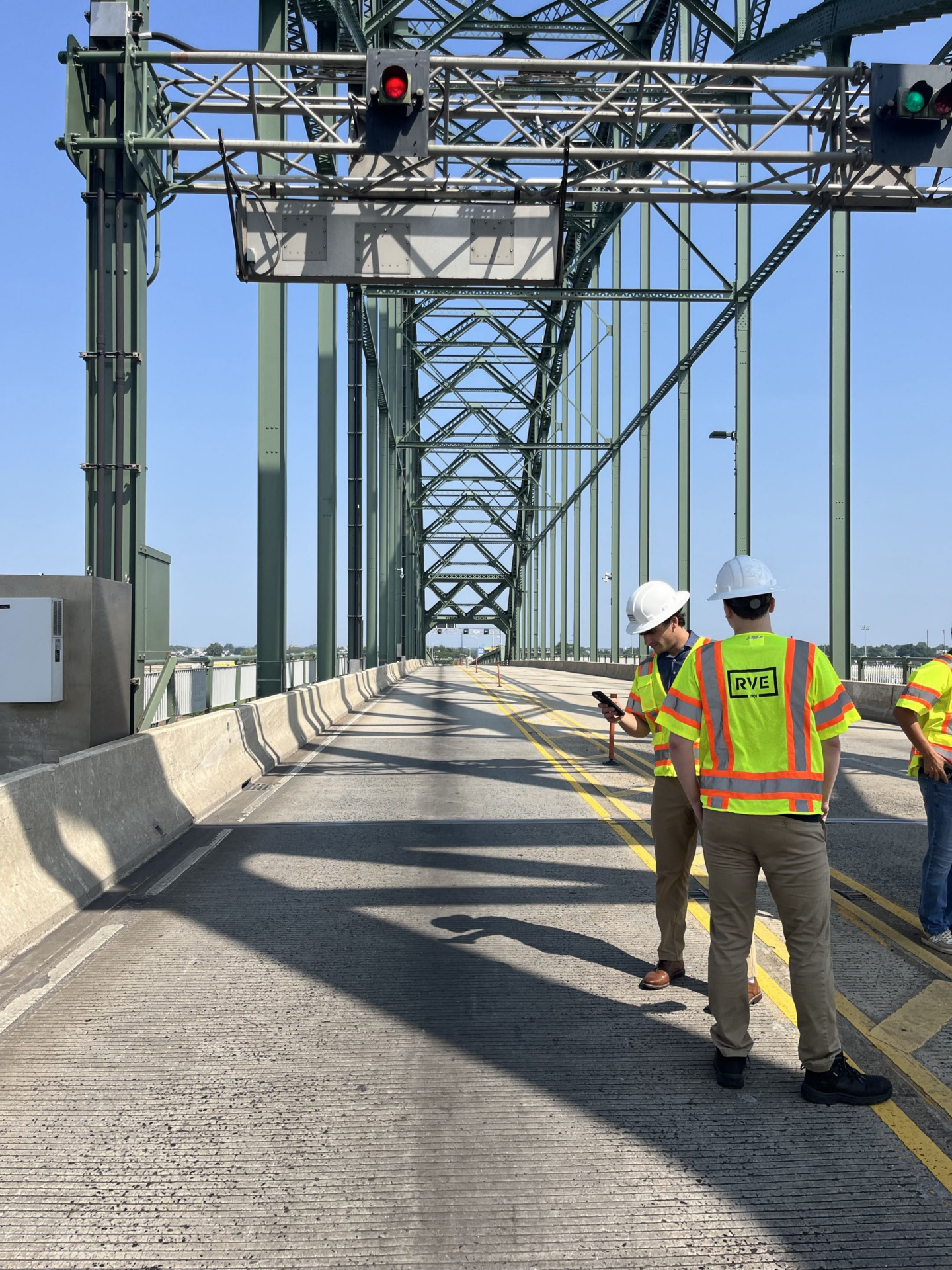
Across the three summers, I prepared narratives, documentation, and cost estimates for Department of Transportation grants. These DOT grants are essential for townships to repave roads and create accessible pathways. Each summer I got faster and faster at preparing the grants, and was trusted to complete more and more applications. I also designed parking lot striping, completed base maps for roads, did AutoCAD (an engineering drawing program) work for roadway projects and their standard construction details, and I supervised construction on a road that was being milled and repaved.

What did I learn
Returning to RVE for three summers meant that I gained more experience in my particular role. As I progressed, I learned more about the team, their roles, and my responsibilities. I could see the evolution of trust as I was given more independence and more projects than the previous summer. Not only did I learn skills and perspectives that I couldn’t gain from classes, but I also found ways to connect my program to the work I was doing. The most striking example is when I was asked to visit a township lot and design parking striping to organize the cars there. Going by what I learned in design classes, I did multiple, varied iterations of the parking striping to discover the optimal way to organize a difficult lot.
The insights and lessons about the engineering profession are something I will carry with me as I start my career.